Habit #9 | Leave this World better than it was when you got here

article240916

“There is one requirement for managing the second half of one’s life: to begin creating it long before one enters it.”Peter Drucker

One can’t help but reflect on the recent economic instability and continued uncertainty. As with many industries, they are cyclical in nature, but the current environment is particularly difficult and the future uncertain. Those that work in these industries, all too well know that when their industry is on a high they are consumed by work – not enough hours in the day to get projects advanced.

However, in a time of crisis, many organisations, true to form, will shed jobs and worry about knowledge retention at some later date, if ever. For an individual who hears the words ‘you are surplus to our needs right now’ this can be seen as a personal failure. As Drucker points out in his book “Management Challenges for the 21st Century“, we expect everyone to be a ‘success’ in this knowledge society, which is clearly impossible. “For where there is success, there has to be failure”, he tells us.

In such times, Drucker believes that it is vitally important for the individual that there is an opportunity to continue to make a difference; contribute to some social need, to be somebody. Therefore, having a ‘second area’ is essential, such as a second or parallel career, a social venture, or an outside interest, any of which will offer an opportunity for being a leader, being respected, being a success.

How often do you reflect on where your career is headed or indeed what you might like to do when retirement approaches? When recently reading Drucker’s book again, one sentence seemed to have a greater relevance in the context of this article; “There is one requirement for managing the second half of one’s life: to begin creating it long before one enters it.” Charles Handy refers to this as the second curve. The Sigmoid curve (S-shaped curve) is used to tell the story of our career/life – and has been a form of certainty in our lives for generations. Starting the second curve can be a big problem for an individual and requires great courage as it needs to be started before the first curve peaks, (a time when usually all the feedback is positive) so that momentum can be maintained. For example, one might have great intentions of things they will do once retired. In Drucker’s experience, this rarely happens. In fact, he says, unless one begins doing those things in their forties, they are unlikely to start doing them once in their sixties.

The title of this article comes from a tribute paid to the late Stephen Covey, author of “The 7 Habits of Highly Effective People”. If the time is right perhaps a way to bring focus to such a reflection might be to apply Covey’s Habit #2: “Begin with the end in mind“. Where better to start than to “leave this World better than it was when you got here”.

First published by author on Linkedin | September 24, 2016
Exemplar House

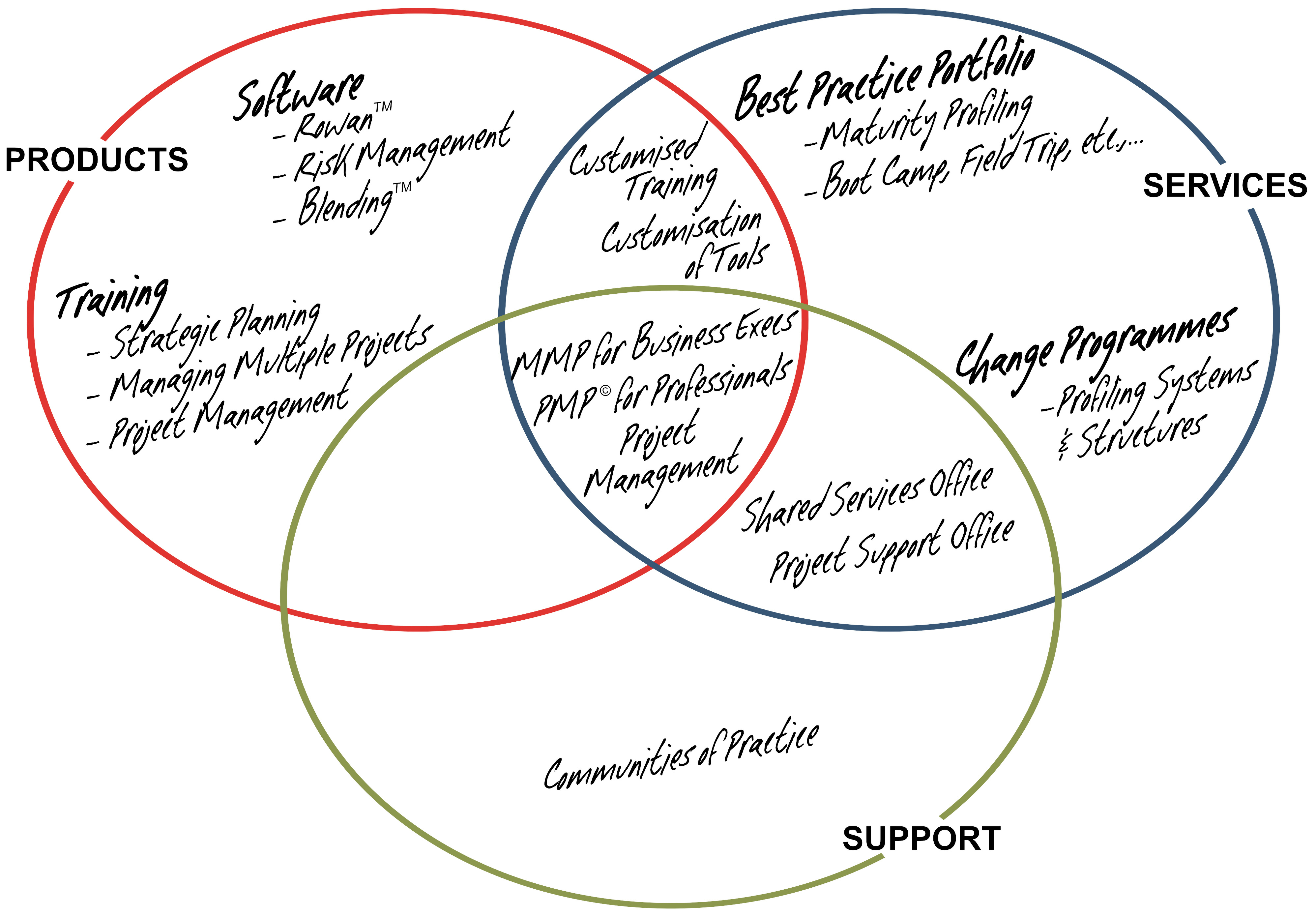
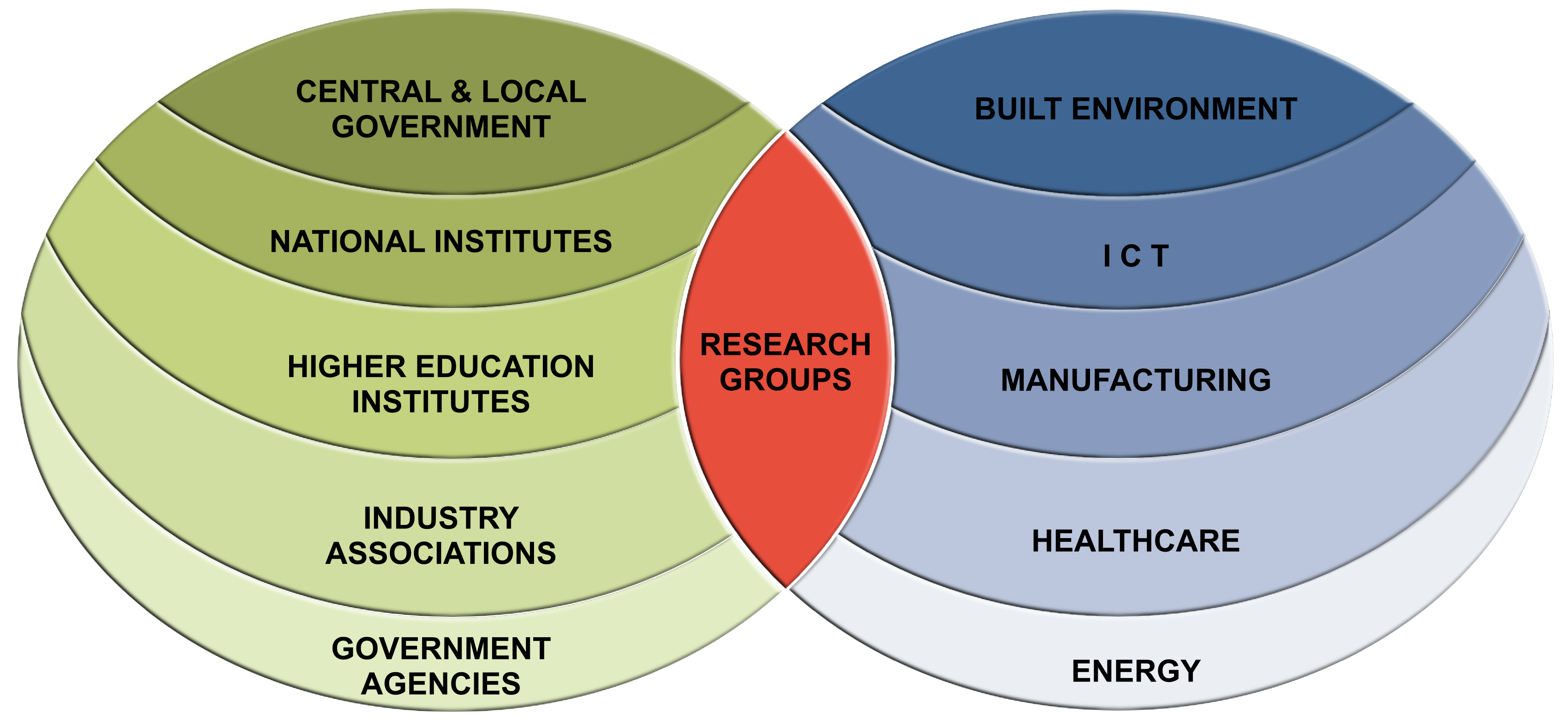
The Exemplar House (iPM) core competency is in the development and implementation of international best practice for the advancement of sustainable enterprise through the effective delivery of projects, programs and portfolio’s and efficient management of all critical resources. Clients span a broad but targeted spectrum as shown in the following diagram.

iPM Business Sectors 3How products, services and support structures are integrated to achieve a successful customer outcome is demonstrated by the following example:

What we do example2It is essential to build a clear picture of the Client’s organisation and to determine its position on a maturity scale with respect to Best Practice, which is undertaken using Maturity Profiling as part of the Profiling Systems and Structures change programme. The outcomes will provide the ‘Baseline’ against which the success of subsequent phases will be measured. Consequently, it is essential that iPM spends adequate time with senior management, the Project Teams and key line managers to assess what work has already been done so that we can be certain that sound foundations are established.

iPM also provides solutions which facilitate the dynamic monitoring and control of portfolios. The sophistication of these tools is dependent upon the organisational requirements ranging from a customised set of templates to a fully integrated enterprise model i.e., Rowan™, a proprietary product. Such tools enable clients to both measure the effectiveness and appropriateness of its actions along with identifying the implications of change at macro and micro levels.

Exemplar House (iPM) is dedicated to the facilitation of organisational reform and supporting all aspects of change programmes. iPM has researched, designed, authored and published many applied programmes for specific industries in order to address their specific needs. Once our clients embrace the culture of change, we are there to support their needs, beyond the scope of the initial change programme through our communities of practice fora which we facilitate on our website.

In summary, the introduction of such programmes is practiced through

  1. The provision of products and services
  2. The delivery of customised training to their practitioners
  3. The integration of processes and procedures with an organisation’s culture and
  4. The implementation of organisational support units, e.g., Project Support Offices [PSO], and Shared Service Offices [SSO], which facilitate the development of higher levels of process maturity through the centralisation of expertise and organisational assets.

Blending™ | Key to Portfolio Selection

Blending™ is a software database system designed by Exemplar House (iPM) for use with all project types to facilitate an organisation / business unit to determine the most appropriate selection of projects that make up the portfolio to enable delivery of the strategic plan.

Whilst the planning horizon is generally the total length of time to implement the strategic plan, decision horizons are typically coincident with the fiscal or business planning cycle. See Hopscotch™ for further details. The primary advantage of the database system is the centralisation of critical data, ability to constantly monitor and update, which results in a knowledge repository for future portfolio decisions.

The Blending™ process is a core instrument of best practice portfolio management and has been recognised within many of the guidance documents as critical to enterprise success. As Blending™ is fundamental to the effective delivery of a strategic plan, it includes the selection and resourcing of portfolio’s of projects, which are continually reviewed at decision horizon points, incorporating the management of both opportunities and threats arising from business uncertainty.

The parameters associated with Project selection are unique to any organisation / business unit, therefore we customise the product to suit customer needs in each case.

Hopscotch™ | Delivery System for Strategic Plan Implementation

Hopscotch ServiceHopscotch™ is a process we developed at iPM, suitable for application in medium-sized to large organisations, to conceptualize the necessary decision-making agility in the selection and de-selection of projects within a current portfolio. It is a truism that the survival and prosperity of organisations is dependent upon their ability to adapt to change.

The Hopscotch™ process maintains focus on achieving the strategic plan set out by the organisation. The application of this approach reflects the organisation’s need for control, the costs associated with change and its risk tolerance.

Enterprise Management | Project Based Approach

The Exemplar House (iPM) philosophy is underpinned by the pursuit of ‘best’ practice and not the adoption of ‘adequate’ practices. Management by projects is the fundamental building block, which enables organisations to embrace the power of project management across many disparate disciplines for the benefit of the organisation as a whole. A vision provides a target for an organisation to aspire to over a defined period of time. A strategic plan provides structure to the vision in terms of deliverables and objectives. Each strategic initiative in a strategic plan can be represented by a collection (Portfolio) of projects, thus the importance of projects. All of these elements are important and very connected. The realisation of the strategic plan can be facilitated by our Hopscotch™ and Blending™ best practices.

Enterprise Management1000 rev0

Collapsible flexible pipe and method of manufacturing same

Priority Date: 2002-11-13

A flexible pipe and a method of manufacturing same according to which the pipe is formed by at least one layer, and an insert disposed in the layer and adapted to limit the strain on the layer when the pipe collapses.

Publication info:

  • WO2004044469 (A2) | 2004-05-27
  • WO2004044469 (A3) | 2004-07-15
  • US2005115622 (A1) | 2005-06-02
  • EP1561060 (A2) | 2005-08-10
  • BR0316200 (A) | 2005-10-04
  • AU2003286344 (A1) | 2004-06-03

Method of towing and installing a pipe

Priority Date: 2002-01-25

According to the present invention, a solution is provided whereby rather than directly towing a pipe ( 30 ) from a tug ( 11 ), a cable ( 23 ) is suspended between two surface vessels ( 10, 11 ), and it is from this cable ( 23 ) that the pipe ( 30 ) itself is suspended at a plurality of points. By means of this arrangement, stress and fatigue is absorbed by the cable ( 23 ) rather than the pipe ( 30 ), such that the pipe ( 30 ) arrives at its installation point with a correspondingly smaller loss in fatigue life.

First page clipping of US2006150884 (A1)

Publication info:

  • WO03062688 (A1) | 2003-07-31
  • US2006150884 (A1) | 2006-07-13
  • US7314016 (B2) | 2008-01-01
  • GB2384537 (A) | 2003-07-30
  • GB2384537 (B) | 2005-06-08
  • EP1468215 (A1) | 2004-10-20
  • EP1468215 (B1) | 2008-04-23
  • DK1468215 (T3) | 2008-08-18
  • AT393345 (T) | 2008-05-15

Deepwater Flexible Risers & Flowlines – A Decade of Case Studies in Brazil

Published: November 2002 | DOT International Conference and Exhibition XIV – “Flexible Solutions for Today and Tomorrow” –  | November 13 – 15, 2002 | New Orleans, Louisiana, USA

Abstract

Offshore oil and gas exploration in deep water continues to provide the industry with new production opportunities and significant technical challenges. Less than three decades ago saw the first installation of flexible pipe in offshore oil and gas developments. Flexible pipe solutions have become synonymous with the use of floating production systems spanning the water column in remote locations, connecting subsea structures with the surface to facilitate the retrieval of hydrocarbons and the injection of water and gas.

Remarkable advances have been made in the development of unbonded flexible pipe structures to meet these challenges, driven to a large extent by Petrobras’s pioneering deep water developments offshore Brazil. These developments have been made possible through research programs funded by Petrobras. Discovered in 1985, the Marlim field, located in the northeastern part of the Campos Basin, was the first field to benefit from these programs. The development of this field was underpinned by the 1986 PROCAP research program focusing on record breaking technologies required to develop not only the Marlim field, but also future deepwater fields, in water depths down to 1,000m.

By 1990 Wellstream had designed and manufactured its first dynamic flexible riser for operation in 1,000m water depths which laid the foundations for Wellstream’s continuing long term deepwater relationship with Petrobras. In 1999 Wellstream set new standards in the development of flexible pipe by becoming the first company to qualify flexible pipe products to 2,000m water depth for the Roncador field, thus meeting the challenge set down by Petrobras in the PROCAP 2000 research program.

Over the decade of the 1990s, significant design and manufacturing challenges were overcome through inhouse research and development programs coupled with support from TCAs(a) with Petrobras. This paper provides an important appraisal of the development and advancement of flexible risers and flowlines for deepwater applications. The information is captured in a number of case studies spanning different field development projects in water depths of 650m to 2,000m over the last ten years. The paper concludes with a summary of the challenges faced in future developments over 2,000m water depth.


Authors:

Tuohy, J., DePaula, M. T., Plank, R. J., Santos, S., Martin, S.

The Application of Unbonded Flexible Risers & Flowlines in Hostile Environments – Shallow Water Case Studies

Published: November 2002 | International Conference on the Application and Evaluation of High-Grade Linepipes in Hostile Environments | November 8 – 9, 2002 | Yokohama, JAPAN

Abstract

Unbonded flexible pipe has a proven track record in the offshore oil and gas industry for more than 25 years. The product is synonymous with the use of floating production systems spanning the water column, connecting subsea structures to facilitate the retrieval of hydrocarbons, provision of water and gas injection systems and the export of processed or semi processed fluids to main trunk pipelines, to onshore, or to floating storage units. Unbonded Flexible pipe is a technically complex multi-layer structure of helically wound metallic wires and tapes and extruded thermoplastics. Applications of flexible pipe solutions in service encompass high temperatures of up to 130ºC, design pressures as high as 100 MPa, with sour service fluids for typical internal pipe diameters up to 16-inch for production applications, and even larger in export applications. Severe environmental conditions; extreme wave and current loads coupled with significant vessel excursions, challenge the design and construction of flexible pipe structures. End fittings are a critical component of the flexible pipe system. They must assure a leak tight transition between subsea and surface facilities, during the applied severe environmental loads and thermal cycling due to start-up and shutdowns, with changes in the fluid barrier material properties over the designed service life. A summary of the results of analyses and tests conducted to verify the integrity of the end fitting with thermal cycling and fluid barrier changes due to high temperature production fluids is included in the case studies presented.
This paper demonstrates the ability of unbonded flexible pipe solutions in the form of dynamic risers and flowlines to be the key enabler for the production of hydrocarbons to floating production systems in hostile environments.


Authors:

Tuohy, J., Sheldrake, Dr. T.