It is indeed extraordinary, the level of investment, and the commitment investors are willing to make to the city of Galway. This will result in what can undoubtedly be described as once-in-a-century developments that will forever impact the future character of not only the city but also the regional towns.
For a considerable period of time, the West region of Engineers Ireland has had a strong focus on its contribution to the sustainable development of the West of Ireland region. Motivated by this ambition, a body of work was commissioned in which there was a critical assessment of the region in terms of its resources and the enormous potential that exists.
In 2008, the West region Committee of Engineers Ireland adopted a plan to develop a comprehensive report on the sustainable development of the West region to 2020. Accordingly, a subcommittee of ten Chartered Engineers was put in place to carry out this work on a voluntary basis, predictably named ‘Engineering the West Team’. Funding was obtained from the Irish Research Council for Science, Engineering and Technology to support a graduate student at NUI Galway to undertake a research-based Master’s Degree. Co-funding for this student came from the West region of Engineers Ireland. The brief for the student was to carry out the necessary background research to ensure that the report could be prepared.
“There is one requirement for managing the second half of one’s life: to begin creating it long before one enters it.” – Peter Drucker
One can’t help but reflect on the recent economic instability and continued uncertainty. As with many industries, they are cyclical in nature, but the current environment is particularly difficult and the future uncertain. Those that work in these industries, all too well know that when their industry is on a high they are consumed by work – not enough hours in the day to get projects advanced.
However, in a time of crisis, many organisations, true to form, will shed jobs and worry about knowledge retention at some later date, if ever. For an individual who hears the words ‘you are surplus to our needs right now’ this can be seen as a personal failure. As Drucker points out in his book “Management Challenges for the 21st Century“, we expect everyone to be a ‘success’ in this knowledge society, which is clearly impossible. “For where there is success, there has to be failure”, he tells us.
In such times, Drucker believes that it is vitally important for the individual that there is an opportunity to continue to make a difference; contribute to some social need, to be somebody. Therefore, having a ‘second area’ is essential, such as a second or parallel career, a social venture, or an outside interest, any of which will offer an opportunity for being a leader, being respected, being a success.
How often do you reflect on where your career is headed or indeed what you might like to do when retirement approaches? When recently reading Drucker’s book again, one sentence seemed to have a greater relevance in the context of this article; “There is one requirement for managing the second half of one’s life: to begin creating it long before one enters it.” Charles Handy refers to this as the second curve. The Sigmoid curve (S-shaped curve) is used to tell the story of our career/life – and has been a form of certainty in our lives for generations. Starting the second curve can be a big problem for an individual and requires great courage as it needs to be started before the first curve peaks, (a time when usually all the feedback is positive) so that momentum can be maintained. For example, one might have great intentions of things they will do once retired. In Drucker’s experience, this rarely happens. In fact, he says, unless one begins doing those things in their forties, they are unlikely to start doing them once in their sixties.
The title of this article comes from a tribute paid to the late Stephen Covey, author of “The 7 Habits of Highly Effective People”. If the time is right perhaps a way to bring focus to such a reflection might be to apply Covey’s Habit #2: “Begin with the end in mind“. Where better to start than to “leave this World better than it was when you got here”.
First published by author on Linkedin | September 24, 2016
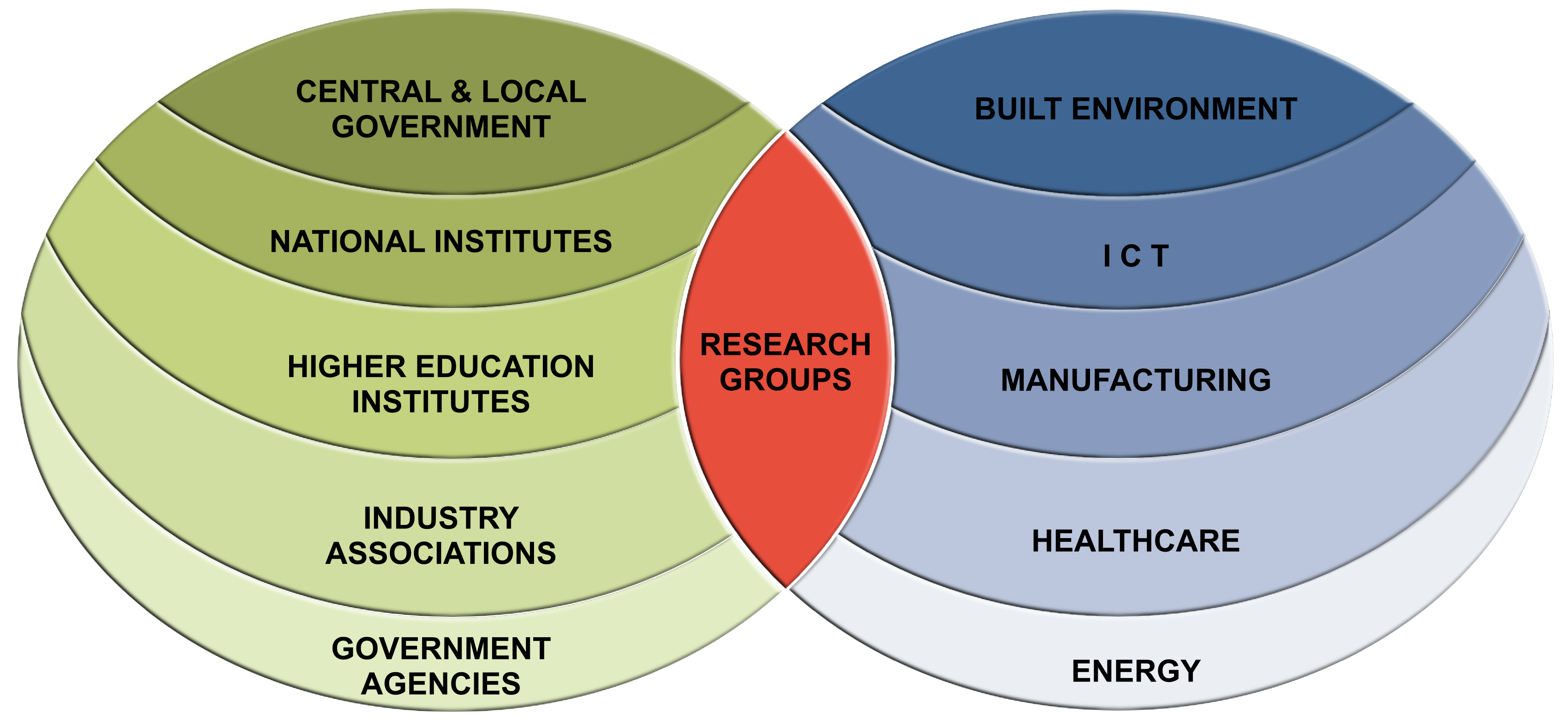
The Exemplar House (iPM) core competency is in the development and implementation of international best practice for the advancement of sustainable enterprise through the effective delivery of projects, programs and portfolio’s and efficient management of all critical resources. Clients span a broad but targeted spectrum as shown in the following diagram.
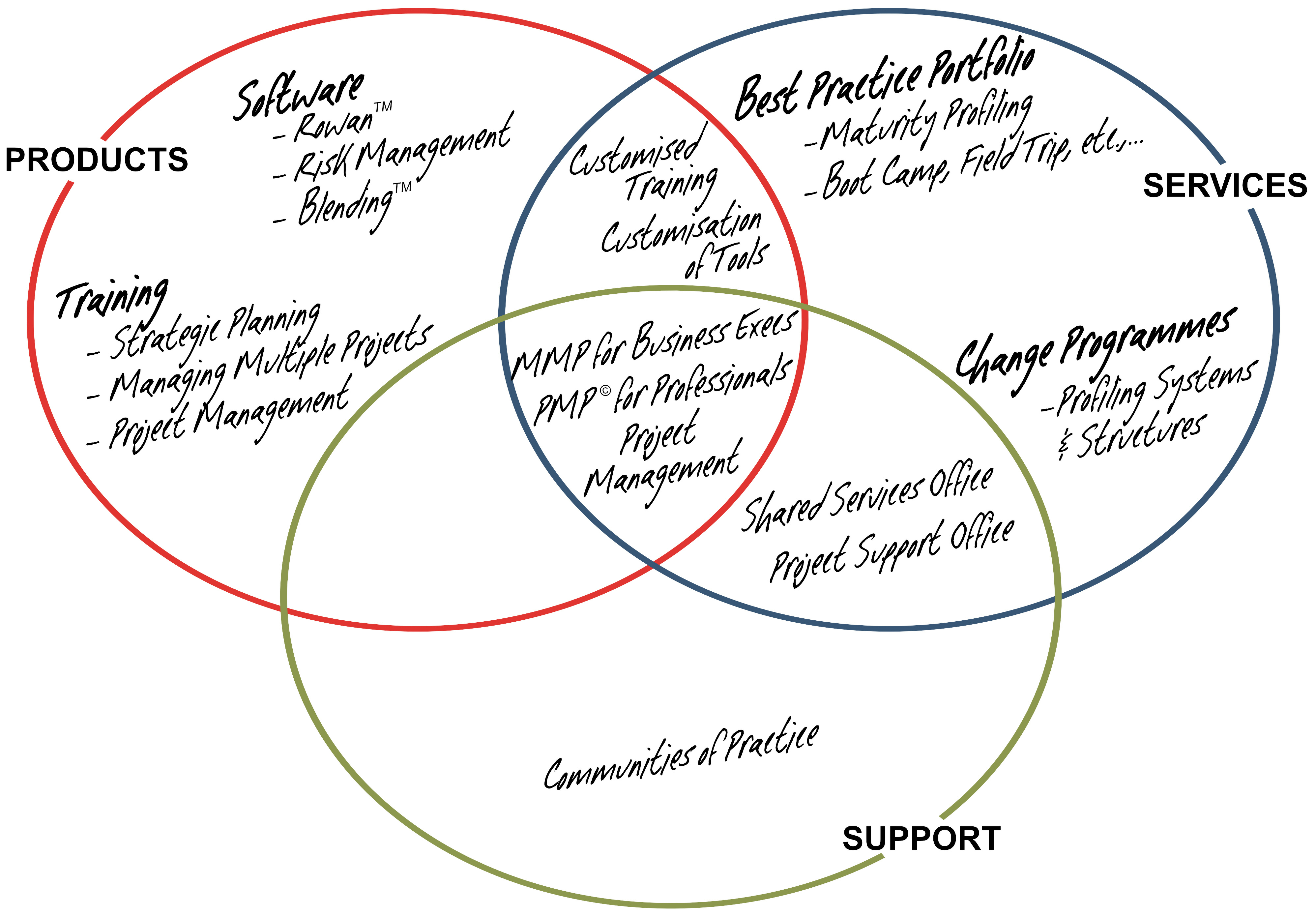
How products, services and support structures are integrated to achieve a successful customer outcome is demonstrated by the following example:
It is essential to build a clear picture of the Client’s organisation and to determine its position on a maturity scale with respect to Best Practice, which is undertaken using Maturity Profiling as part of the Profiling Systems and Structures change programme. The outcomes will provide the ‘Baseline’ against which the success of subsequent phases will be measured. Consequently, it is essential that iPM spends adequate time with senior management, the Project Teams and key line managers to assess what work has already been done so that we can be certain that sound foundations are established.
iPM also provides solutions which facilitate the dynamic monitoring and control of portfolios. The sophistication of these tools is dependent upon the organisational requirements ranging from a customised set of templates to a fully integrated enterprise model i.e., Rowan™, a proprietary product. Such tools enable clients to both measure the effectiveness and appropriateness of its actions along with identifying the implications of change at macro and micro levels.
Exemplar House (iPM) is dedicated to the facilitation of organisational reform and supporting all aspects of change programmes. iPM has researched, designed, authored and published many applied programmes for specific industries in order to address their specific needs. Once our clients embrace the culture of change, we are there to support their needs, beyond the scope of the initial change programme through our communities of practice fora which we facilitate on our website.
In summary, the introduction of such programmes is practiced through
The provision of products and services
The delivery of customised training to their practitioners
The integration of processes and procedures with an organisation’s culture and
The implementation of organisational support units, e.g., Project Support Offices [PSO], and Shared Service Offices [SSO], which facilitate the development of higher levels of process maturity through the centralisation of expertise and organisational assets.
Blending™ is a software database system designed by Exemplar House (iPM) for use with all project types to facilitate an organisation / business unit to determine the most appropriate selection of projects that make up the portfolio to enable delivery of the strategic plan.
Whilst the planning horizon is generally the total length of time to implement the strategic plan, decision horizons are typically coincident with the fiscal or business planning cycle. See Hopscotch™ for further details. The primary advantage of the database system is the centralisation of critical data, ability to constantly monitor and update, which results in a knowledge repository for future portfolio decisions.
The Blending™ process is a core instrument of best practice portfolio management and has been recognised within many of the guidance documents as critical to enterprise success. As Blending™ is fundamental to the effective delivery of a strategic plan, it includes the selection and resourcing of portfolio’s of projects, which are continually reviewed at decision horizon points, incorporating the management of both opportunities and threats arising from business uncertainty.
The parameters associated with Project selection are unique to any organisation / business unit, therefore we customise the product to suit customer needs in each case.
Hopscotch™ is a process we developed at iPM, suitable for application in medium-sized to large organisations, to conceptualize the necessary decision-making agility in the selection and de-selection of projects within a current portfolio. It is a truism that the survival and prosperity of organisations is dependent upon their ability to adapt to change.
The Hopscotch™ process maintains focus on achieving the strategic plan set out by the organisation. The application of this approach reflects the organisation’s need for control, the costs associated with change and its risk tolerance.
The Exemplar House (iPM) philosophy is underpinned by the pursuit of ‘best’ practice and not the adoption of ‘adequate’ practices. Management by projects is the fundamental building block, which enables organisations to embrace the power of project management across many disparate disciplines for the benefit of the organisation as a whole. A vision provides a target for an organisation to aspire to over a defined period of time. A strategic plan provides structure to the vision in terms of deliverables and objectives. Each strategic initiative in a strategic plan can be represented by a collection (Portfolio) of projects, thus the importance of projects. All of these elements are important and very connected. The realisation of the strategic plan can be facilitated by our Hopscotch™ and Blending™ best practices.
I attended the launch of an initiative which aims to get Galway’s road users involved in a public discussion on traffic flow around the city. The programme, named ‘Galway Transport – Engage for a liveable city’ was launched by Mayor Hildegarde Naughton on Monday night 28th November at the Meyrick Hotel.
The group responsible for the initiative includes members of Engineers Ireland West Region, individuals with specific transportation expertise, and strong support from NUI Galway, firstly on the engineering side to address the traffic issues, and secondly from the Digital Enterprise Research Institute, bringing best practice in web technologies and smart systems.
Everyone is invited to engage in the process, including residents of Galway, those who commute to work in Galway, business interests, visitors, officials and councillors of Galway City Council, other public representatives, An Garda Síochána and other relevant statutory bodies, together with private and public sector providers of transport services in the city. They can do so by engaging with the initiative through online www.galwaytf.com and offline surveys and a blog on the Galway Transport Forum website, which welcomes contributions and comments.
The survey period will end on the 12th January, 2012 so be sure to contribute before the close date.
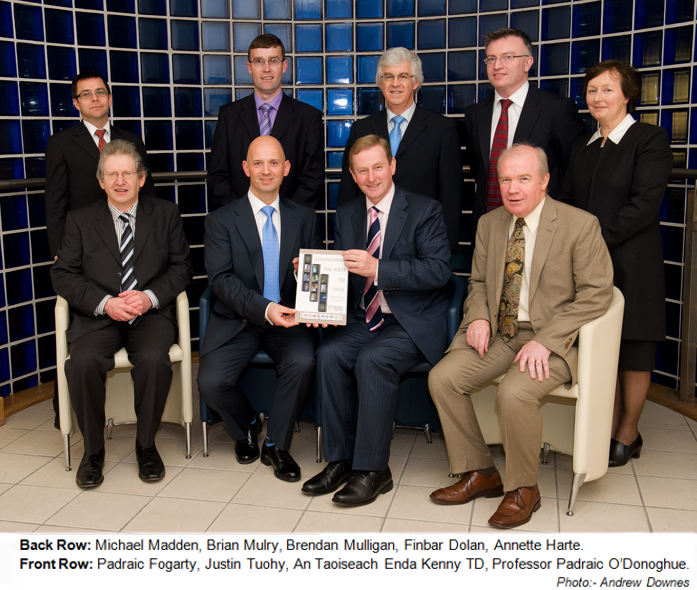
One of the objectives of Phase II of the Engineering the West Project Team is the communication of the vision from “Engineering the West Region to 2020 – Reinventing our Region” is presenting elements of the project throughout the region. On the 19th of November we had the opportunity of presenting the publication to An Taoiseach along with having a discussion with him regarding the key recommendations contained therein.
The press release is available at the following link
A flexible pipe and a method of manufacturing same according to which the pipe is formed by at least one layer, and an insert disposed in the layer and adapted to limit the strain on the layer when the pipe collapses.
According to the present invention, a solution is provided whereby rather than directly towing a pipe ( 30 ) from a tug ( 11 ), a cable ( 23 ) is suspended between two surface vessels ( 10, 11 ), and it is from this cable ( 23 ) that the pipe ( 30 ) itself is suspended at a plurality of points. By means of this arrangement, stress and fatigue is absorbed by the cable ( 23 ) rather than the pipe ( 30 ), such that the pipe ( 30 ) arrives at its installation point with a correspondingly smaller loss in fatigue life.



 Justin Tuohy | @pen
You must be logged in to post a comment.