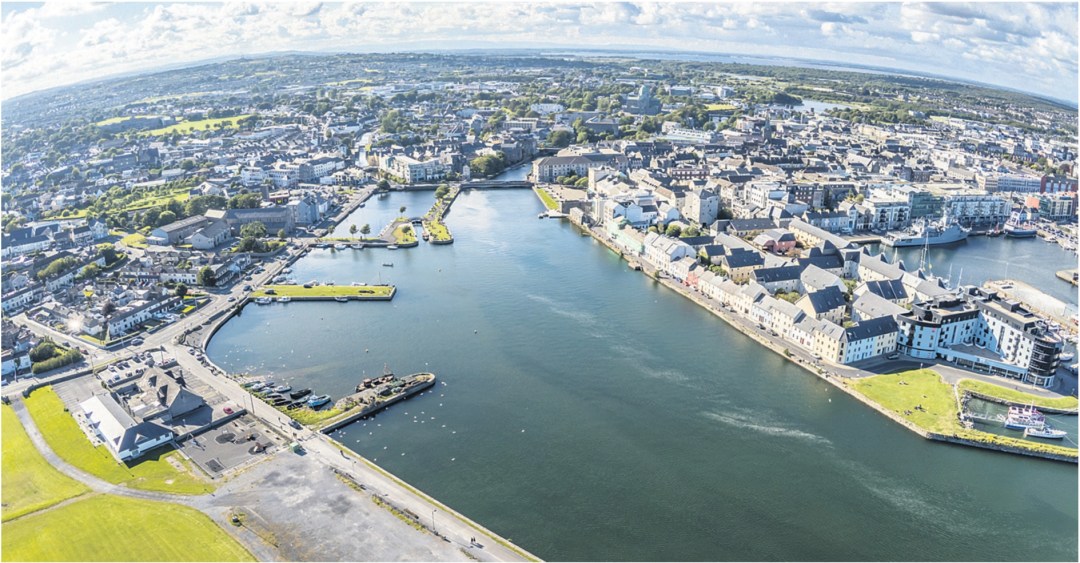
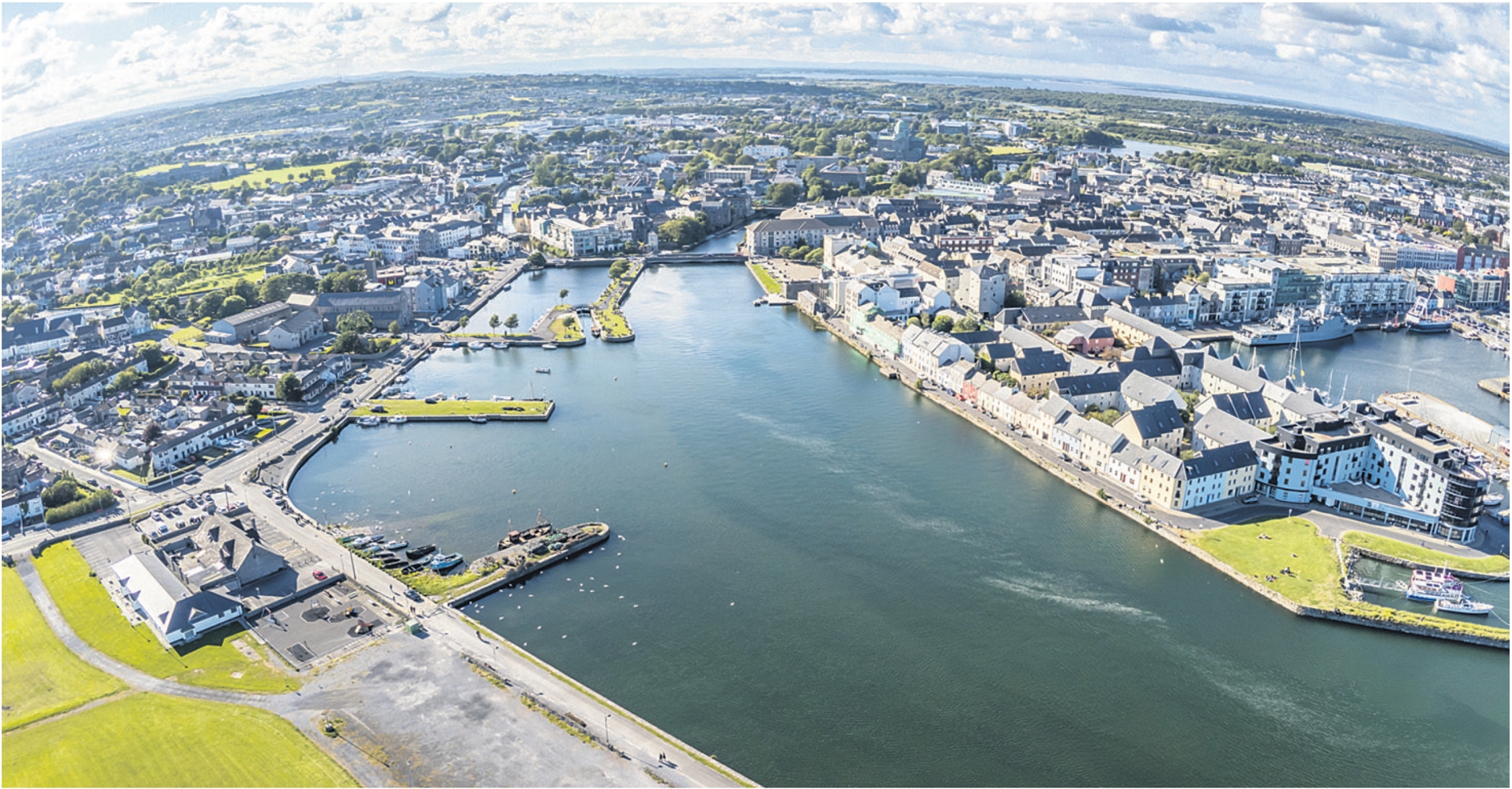
It is indeed extraordinary, the level of investment, and the commitment investors are willing to make to the city of Galway. This will result in what can undoubtedly be described as once-in-a-century developments that will forever impact the future character of not only the city but also the regional towns.
For a considerable period of time, the West region of Engineers Ireland has had a strong focus on its contribution to the sustainable development of the West of Ireland region. Motivated by this ambition, a body of work was commissioned in which there was a critical assessment of the region in terms of its resources and the enormous potential that exists.
In 2008, the West region Committee of Engineers Ireland adopted a plan to develop a comprehensive report on the sustainable development of the West region to 2020. Accordingly, a subcommittee of ten Chartered Engineers was put in place to carry out this work on a voluntary basis, predictably named ‘Engineering the West Team’. Funding was obtained from the Irish Research Council for Science, Engineering and Technology to support a graduate student at NUI Galway to undertake a research-based Master’s Degree. Co-funding for this student came from the West region of Engineers Ireland. The brief for the student was to carry out the necessary background research to ensure that the report could be prepared.
Highly consultative
A key feature of the research work was that it was highly consultative. This was to ensure that the views of a broad range of stakeholders were included in the outcomes and that they influenced the recommendations. There was also considerable interaction between the student, the academic supervisors and the Engineering the West Team to adjust the direction of the research as appropriate and to provide other inputs.
During our research we evaluated numerous approaches to sustainable development and how it might be applied to the region – Galway, Mayo and Roscommon. It remains a great challenge to design and deliver infrastructure to support our economic and social prosperity while at the same time reducing our ecological footprint. Most approaches appeared too narrow in focus.
Finally, we found a framework approach to sustainability, promoted by the World Wildlife Fund (WWF) and developed by Bioregional called ‘One Planet Living’. Evaluating the concepts at the same time as pondering the environmental issues faced by the ‘Engineering the West to 2020’ project resulted in the creation of the idea for a new way forward for our region. In essence, it was proposed that the key to unlocking this potential was through the adoption of a sustainability framework on which the future developments would be based. We believed this approach had the potential of providing a major positive impact on our region and in addition the ability to promote prosperity while protecting our environment.
The ‘Engineering the West to 2020 – Reinventing Our Region’ report was based on a sustainability framework for development of the West region of Ireland using the 10 principles of One Planet Living and was launched on 30th April 2011, at the Engineers Ireland Annual Conference in Galway. On day two of the conference we facilitated a half day workshop entirely to the substance of this document. Communicating the work we had undertaken was a priority and further presentations were made throughout the region. We were also invited by the North-West region of Engineers Ireland to make a presentation to their members and the public in Sligo and to the Board of the West Regional Authority. In addition, we had an opportunity on 19th November 2011, to meet with and make a presentation of our report to the then Taoiseach, Enda Kenny TD, unique since he represented our region.
Much-changed nation
There is no doubt that Ireland is a much-changed nation since this report was commissioned. Nevertheless, simple and universally accepted definitions of sustainability and sustainable development are not easy to come by. Sustainability has been described as “improving the quality of human life while living within the carrying capacity of supporting ecosystems” while the most commonly quoted definition of sustainable development is “development that meets the needs of the present without compromising the ability of future generations to meet their own needs”. Whichever definition is used the overriding principle is to recognise the interconnections between economic and social interests and the finite resources available from our living world.
We run the risk of short-term thinking if we consider the job done when a building or indeed a development gets a sticker to say its sustainable. Put simply that is like having an electric car planted in the middle of a familiar row of gas guzzlers trying to escape the city at the end of a workday. The true sustainability of any development can only be evaluated in the context of its integration and progression towards the ideals we envisage for the City for future generations to come. Anthony Probert, a former project manager at Bioregional, in an article entitled; ‘After Architects Declare, there is now only one shade of green building’, articulated this succinctly when he said;
“We need to move past reliance solely on compliance and certification because there is zero space for grey anymore. From now on, your development is either sustainable, or it is not. It either maximises its contribution to the fight against climate change and nature loss, or it doesn’t. It fully supports people to lead wholly sustainable lifestyles, or it’s part of the problem.”
We continue, as a voluntary group to promote and support initiatives and developments that embrace a sustainability framework in full. In March 2018 we arranged for the head of One Planet Living at Bioregional to give a series of lectures and undertake informal discussions with a number of groups. These included, the forward planners from all the local authorities in the region and the Northern and Western Regional Assembly, kindly hosted by Galway City Council, Galway Chamber and a public lecture on the application of a sustainable framework, kindly hosted by NUI Galway in the Alice Perry engineering building.
Our responsibility to our living world
We Chartered Engineers and members of Engineers Ireland are already cognisant of our responsibility to our living world. Our Code of Ethics makes our commitment to sustainability crystal clear. In recognition of our individual and collective responsibility to act to address the threat to our planet, the members of the West region committee of Engineers Ireland unanimously decided to put down a motion addressing Climate Breakdown and Biodiversity Collapse. This motion is now before the governing body of Engineers Ireland, the Council, for consideration at its meeting in February.
Words too are important. When traffic is described in terms of ‘commuters’ or the homeless crisis being resolved by building more ‘units’ nothing will change. Commuters are people. The homeless are people. They ought to live in buildings that they can call home. Until we place people front and centre in our strategic planning and development activities nothing will change. The health and well-being of our people is key to enabling communities and society to be more proactive, more productive, happier and healthier thus reducing the burden on public services.
Your wish is that the new Galway will be a place where people do not have to spend ten hours a week in traffic. According to figures presented last week by the State broadcaster, there are at least 200,000 people spending two or more hours commuting to and from their place of work each day. For most of those they have the M50 at their disposal. If we consider there is on average 220 working days in the year, for these people alone that is a staggering 88 million lost hours that can only have a negative impact on their health and well-being and on that of their families, communities and indeed society. Random isolated policies by way of incentives or by forcing people, for example, to purchase electric cars, while a headline grabber, does not in any way address the effects of their daily commute, improve their health and well-being, or recover the 18 days each has lost in a single year.
You may well ask how far have we come since 2010 or even 2000? Look around, has anything changed? Are the headlines the same, or just worse? It is worrying when you hear pronouncements such as, “Galway is going to be the next Dublin”. We put it to you, what is it that Dublin has that Galway can’t do without? Perhaps Richard Susskind captured the observation well when he said;
“There are none so conservative or reactionary as those who benefit from the status quo”.
We thank you for articulating what perhaps many have been thinking, and we will continue to support those efforts where the outcomes are positively towards the many. In the words of Mark Gonzales;
“we are the pivot point between all that ever was (ancestors) and all that ever will be (generations to come). Who are we but ancestors in training.”
[This is an extract of a ‘‘reply to Editor’‘ first published in the Galway Advertiser on 30th January 2020]

 Justin Tuohy | @pen
You must be logged in to post a comment.